
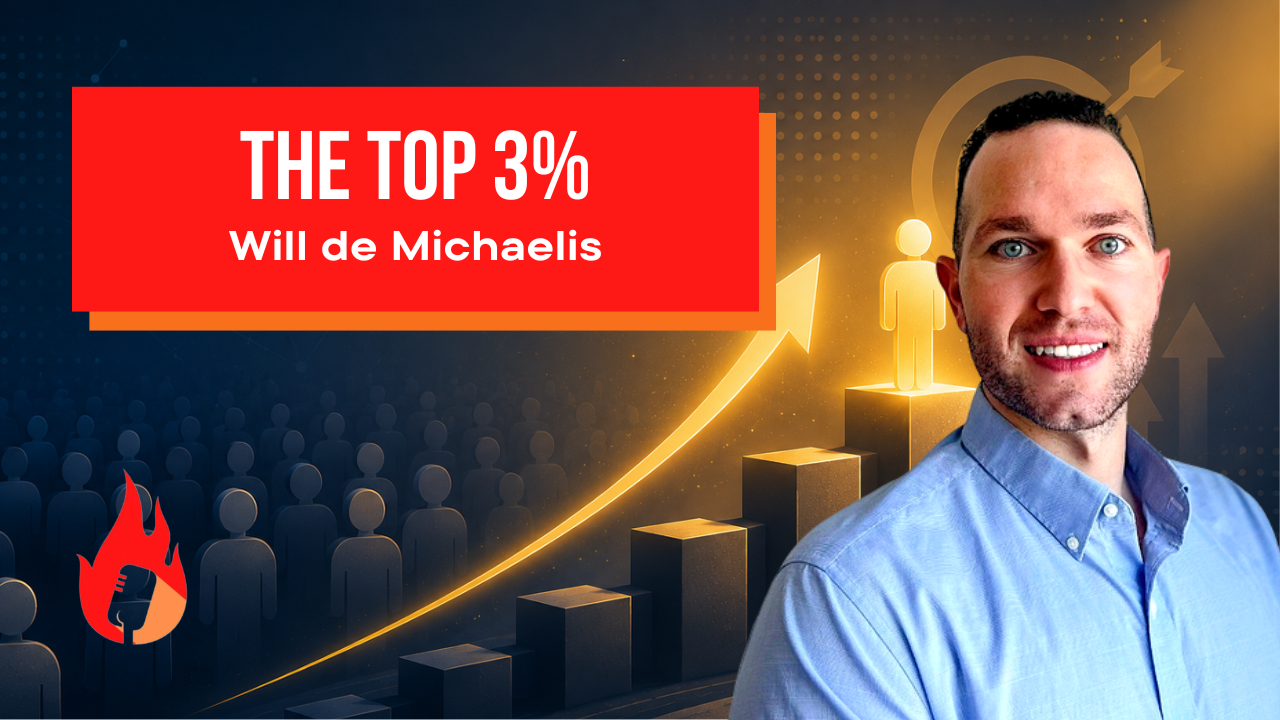
The Top 3% | Will de Michaelis (PartingPro) #1
Most funeral home owners believe that providing exceptional care is the key to long-term success. While compassion remains at the heart of funeral service, this episode of the Direct Cremation Podcast challenges a common assumption: compassion alone does not build a thriving funeral business.
In this solo episode, Will de Michaelis dives into data collected from more than 500 funeral homes and uncovers the operational patterns shared by the industry’s highest performers. These elite firms represent just 3.7% of the funeral homes studied, yet they consistently handle 1,000, 2,000, and even 3,000 cases annually.
The findings may surprise you!
The Top Firms Build Teams, Not Empires
One of the clearest patterns among high-performing funeral homes is their ability to build scalable teams.
Many funeral home owners become the center of every decision, every phone call, and every problem. The top operators take a different approach. They create systems, establish clear roles, and develop teams that can manage volume without depending on one person.
According to the data, top-performing firms average nearly three times as many active users in their systems compared to smaller operations. Rather than relying on heroic efforts from a few employees, they distribute responsibilities across the organization.
This approach improves both efficiency and customer experience. When funeral arrangers, office staff, removal teams, and management all understand their roles, families receive more consistent service.
Modern funeral home software and funeral management systems play an important role in supporting these workflows by creating accountability and visibility across the organization.
They Never Stop Improving
The most successful funeral homes treat their business as a work in progress.
While many firms become comfortable with existing processes, the top performers actively seek ways to improve operations. They attend conferences, participate in pilot programs, explore new technologies, and stay informed about industry trends.
The episode highlights a striking statistic. More than 60% of top firms actively explore new operational tools and features, compared to just 10% of smaller firms.
Top firms consistently evaluate:
- Family communication
- Staff performance and training
- Internal workflows
- Service offerings
- New technologies and industry trends
Whether it’s adopting funeral service software, implementing online funeral arrangements, or experimenting with innovative funeral home ideas, they view change as an opportunity rather than a threat.
The Best Operators Know Their Numbers
One of the most valuable lessons from the episode centers on financial visibility.
Many funeral professionals enter the industry because they want to help people, not because they love spreadsheets. Will acknowledges this reality while making a compelling case for tracking business metrics.
What to regularly track:
- Cost per case
- Profit margins by service type
- Weekly and monthly call volume
- Staffing efficiency
- Seasonal performance trends
This knowledge allows them to make better decisions.
Instead of waiting until tax season, they monitor business health in real time. They understand when call volume slows, where profitability is strongest, and how operational changes impact results.
The best funeral home software and cremation software solutions make this visibility easier than ever by providing reporting dashboards, case tracking, and performance analytics.
Commitment Separates Leaders from Followers
Another common characteristic among top funeral homes is decisive action.
Many businesses test new systems, launch initiatives halfway, or abandon projects before they gain traction. The top performers do the opposite.
When they commit to a new process, they fully implement it. They train their teams, create standard operating procedures, and monitor adoption closely.
The research showed that highly engaged firms were dramatically more successful than organizations that treated improvements as temporary experiments.
Whether implementing funeral planning software, launching online cremation services, or redesigning a funeral website, success comes from commitment, not curiosity.
They Own Their Core Operations
Perhaps the most surprising finding involved outsourcing.
Conventional wisdom suggests that outsourcing creates efficiency. However, the highest-performing funeral homes often maintain control over their core operations.
Many top-performing firms maintain control over removals, transportation, logistics, family communication, and case management.
This approach allows them to maintain quality standards, improve communication, and strengthen their brand reputation.
While not every funeral home has the resources to own crematory equipment, transportation fleets, or in-house teams immediately, the episode suggests that controlling more of the experience often creates long-term advantages.
Operational Excellence Is Compassion at Scale
The biggest takeaway from this episode is simple.
The top 3% are not more compassionate than everyone else. They simply understand that operational excellence allows compassion to scale.
The top 3% consistently focus on:
- Building strong, scalable teams
- Continuously improving operations
- Tracking key business metrics
- Fully committing to change
- Owning the family experience
These habits create an environment where families consistently receive exceptional care.
Technology can support that mission. Whether through funeral arranging software, crematory software, online cremations, or a comprehensive funeral management system, the goal remains the same: create a better experience for families while building a healthier business.
For funeral home owners looking to grow, the lesson is clear. Compassion gets families through the door. Strong operations ensure you can continue serving them for years to come.