
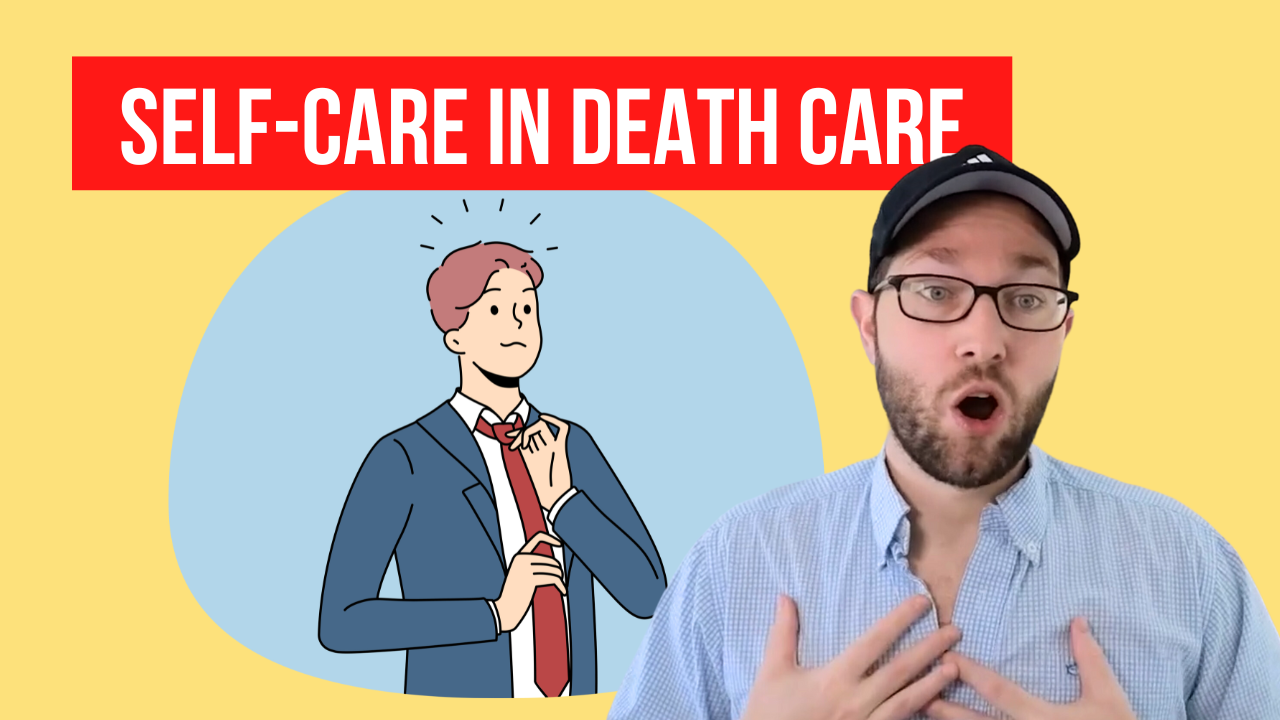
Self-Care in Death Care #33
In a death care business, you don’t just manage logistics—you hold space for trauma, grief, and the rawest moments of people’s lives. In this solo episode of the Direct Cremation Podcast, host Will Demichelis steps away from the usual operations and business-development talk to speak directly to the people doing the work. He names a problem many funeral home and crematory teams whisper about but rarely address head-on: workplace burnout.
Will frames funeral service as a “ministry of empathy,” and he doesn’t romanticize it. He calls the work emotionally demanding and warns that unchecked burnout doesn’t just hurt you—it hurts your families, your colleagues, and the quality of care your firm can deliver. If the workforce runs on empty, nobody wins.
Why Burnout Hits Funeral Home Management So Hard
Will starts with a truth that every funeral arranger and crematory operator understands: death care requires constant emotional output. You witness acute grief responses day after day. You navigate sudden conflict, complicated families, time pressure, and after-hours calls. Even when your processes run smoothly, the job still asks you to be present, steady, and compassionate on demand.
That’s why Will returns to a simple principle: you can’t pour from an empty cup. When you ignore your own needs, you can’t show up fully for families—or for your own life outside the office.
The Classic Burnout Signs Will Wants You to Recognize
Using a framework he found helpful from the Mayo Clinic’s overview of workplace burnout, Will walks through several red flags that often show up in death care:
- Emotional exhaustion: You feel drained before the day even starts.
- Depersonalization: You distance yourself from families or treat intimate moments like tasks, not because you don’t care, but because your brain tries to protect your remaining energy.
- Decreased sense of accomplishment: You stop noticing wins—like a smooth identification, a grateful family email, or a teammate stepping up—because you can’t access that “reward” feeling.
- Low mood: You carry a heavy baseline mood for weeks or months, not just after a tough call.
He shares something important for this audience: burnout doesn’t make you a bad person. Burnout often shows up as a defense mechanism in good people who care too much for too long without refueling.
A Quick Self-Audit For Funeral Service Professionals
Will then offers practical questions you can ask yourself to spot burnout early. A few hit especially hard in funeral homes and crematories:
- Do you feel cynical or overly critical at work?
- Do you drag yourself to work and struggle to get started?
- Do you feel irritable or impatient with coworkers or families?
- Do you lack the energy to stay consistently productive?
- Do you struggle to concentrate or feel numb about achievements?
- Do you feel disillusioned about your job or your place in the industry?
- Have you leaned on food, drugs, or alcohol to “not feel”?
- Have your sleep habits changed because the job keeps you in constant alert mode?
- Do you get unexplained headaches, stomach issues, or other physical stress symptoms?
His message stays consistent: tell the truth to yourself first. Then lean on support—your family, coworkers, mentors, or a professional.
What Actually Causes Burnout In Death Care Workplaces
Next, Will maps common causes that show up in funeral home management and in crematory operations:
- Lack of control: You can’t influence scheduling, workload, or decisions that shape your day.
- Unclear job expectations: Your role feels fuzzy, authority feels mismatched, and boundaries stay undefined.
- Dysfunctional workplace dynamics: Micromanagement, bullying, or constant undermining drains you fast.
- Extremes of activity: The day swings between monotonous tasks and chaos—then repeats.
- Lack of social support: You feel isolated at work or at home, so stress multiplies.
- Work-life imbalance: The job takes everything, leaving no room for hobbies, relationships, or recovery.
Anyone who has lived through back-to-back removals, nonstop calls, or “everything is urgent” culture knows how quickly these stack up.
An Operational Angle: Use Funeral Tech to Reduce Chaos, Not Add to It
This episode focuses on self-care, but it also pairs well with a practical takeaway for owners and managers: reduce unnecessary friction in the day-to-day.
When your team drowns in interruptions, paperwork, and unclear handoffs, even the most empathetic staff burns out. Many firms now use funeral tech to lighten that load—tools like funeral arrangement software, a funeral management system, or crematory software that centralize cases, track tasks, and reduce “Where are we on this?” stress.
The right funeral home software (and yes, people will search for the best funeral home software) can support healthier workflows. A mobile funeral director app can also cut down on constant phone tag. Even family-facing tools—like online funeral arrangements, online cremation services, or a clear cremation website—can reduce repetitive calls and help families move at their own pace.
Technology won’t replace good leadership, but it can remove pressure points that push good people toward burnout. That’s an innovative funeral home idea worth considering.
The Point of The Episode
Will closes with a call to bring burnout out into the open—without shame. Death care attracts deeply compassionate people, and that compassion deserves protection. If you’ve felt yourself slipping—emotionally, physically, or relationally—this episode offers language for what’s happening and a starting place for change.
If you work in funeral service, cremation arrangements, or arrangement conferences all day, take this as your reminder: care for yourself with the same urgency you bring to families. Your community needs you healthy, steady, and supported.
🎧 Watch the full episode here: https://www.youtube.com/watch?v=S1PUy-4aq7M